

Families often tell me they have never heard of NHS funded care at home until someone mentions it in a hospital corridor. It is worth ten minutes of your time, because when it applies, the NHS pays for the care. Adults and children are assessed under different rules, so this guide covers both.
What it is
For adults it is called NHS Continuing Healthcare, or CHC: a package of care that the NHS arranges and funds. For children and young people under 18 it is called continuing care, and it works a little differently. Both can be given in your own home, and your savings and income are not looked at.

Adults: who it is for
CHC is for people whose care needs are mainly about health, not help with daily living alone. A diagnosis does not qualify or disqualify anyone. Two people with the same condition can get different answers, because the assessors look at the person's needs, not the name of the illness.
The assessors are trying to answer four questions:
What kind of needs are these, and what skill does it take to meet them?
How much care is needed, and how often?
Do several needs interact, so that treating one affects another?
How quickly can things change, and how serious is it if help is late?
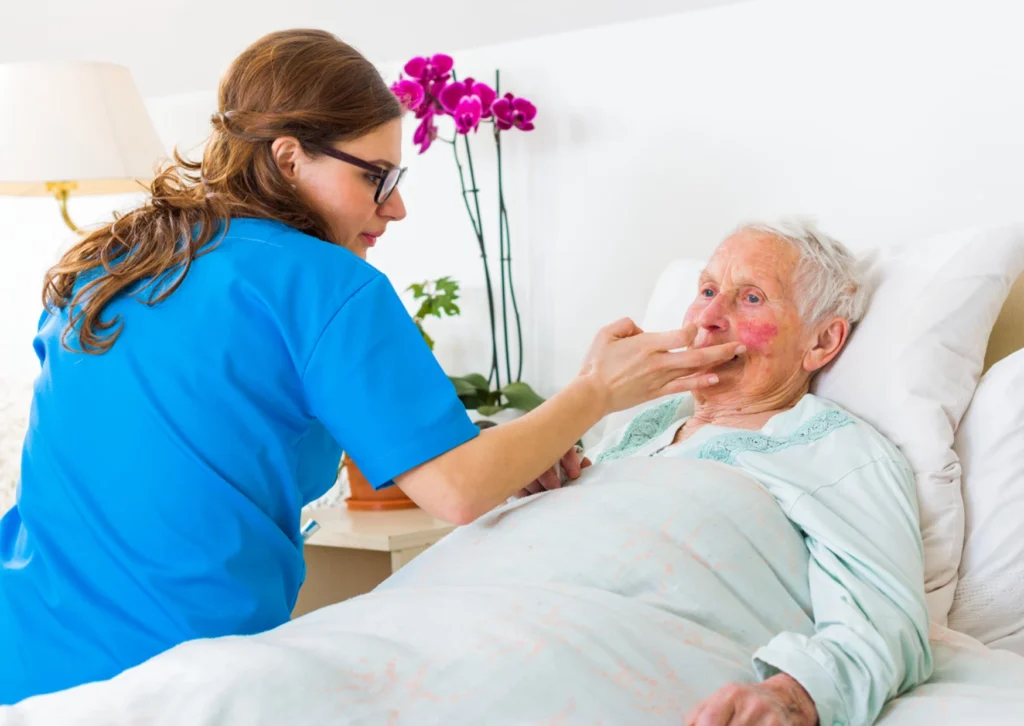
Adults: how the assessment works
1. A checklist. A nurse, doctor or social worker completes a short screening form. Anyone can ask for one.
2. A full assessment. If the checklist suggests you may qualify, a team of professionals who know you looks at your needs in detail. You and your family should be invited.
3. A decision. Your integrated care board (ICB) decides. This should usually take no more than 28 days from the checklist.
For someone whose health is declining quickly and who may be nearing the end of life, there is a fast track route. Ask the clinician in charge of their care.
If the care is for a child

Children and young people under 18 are not assessed for CHC. They have their own route, called children and young people's continuing care. It is for a child whose health needs, from a disability, an illness or an accident, are more than ordinary NHS and community services can meet on their own.
Ask a health professional who knows your child to make a referral, such as the community children's nurse, paediatrician, GP or social worker. A children's health assessor from the ICB then looks at your child's needs and listens to you and your child before a decision is made.

It is rarely all or nothing. The NHS often funds the health part of a package while the council funds social care or education support, and it should fit with an education, health and care (EHC) plan if your child has one. You can ask about having the health part as a personal health budget.
Adult CHC uses different rules, so planning for the move to adult services should start well before your child turns 18.
What I tell families to do, for an adult or a child
Keep a diary for two weeks before the assessment: falls, bad nights, missed meals, changes in mood, every call to the GP. Our free Weekly Care Log is made for this.
Go to the assessment, or send someone who knows the daily reality.
Describe the worst days as well as the good ones. People tend to put on a brave face for visitors.
Ask for the decision and the reasons in writing.

If the answer is yes
The ICB agrees a care package with you. If you are cared for at home, you can ask for it as a personal health budget, which gives you more say over who provides your care and how. Funding is reviewed, usually after three months and then once a year.
If the answer is no
You can ask the ICB to look again. You may still be entitled to help from your council, and some people receive a package paid for jointly by the NHS and the council.

Where we come in
We do not carry out these assessments and cannot decide who qualifies. What we can do is explain the process, help you keep good records, and talk to you about care at home whichever way it ends up being paid for. Our own care for children is subject to CQC approval, so please ask us what we can offer today. Call us on 020 3355 3607.
For the other ways care at home is paid for, see Funding your care.
Sources: NHS: NHS Continuing Healthcare · NHS: What is a personal health budget? · GOV.UK public information leaflet · GOV.UK: children and young people's continuing care